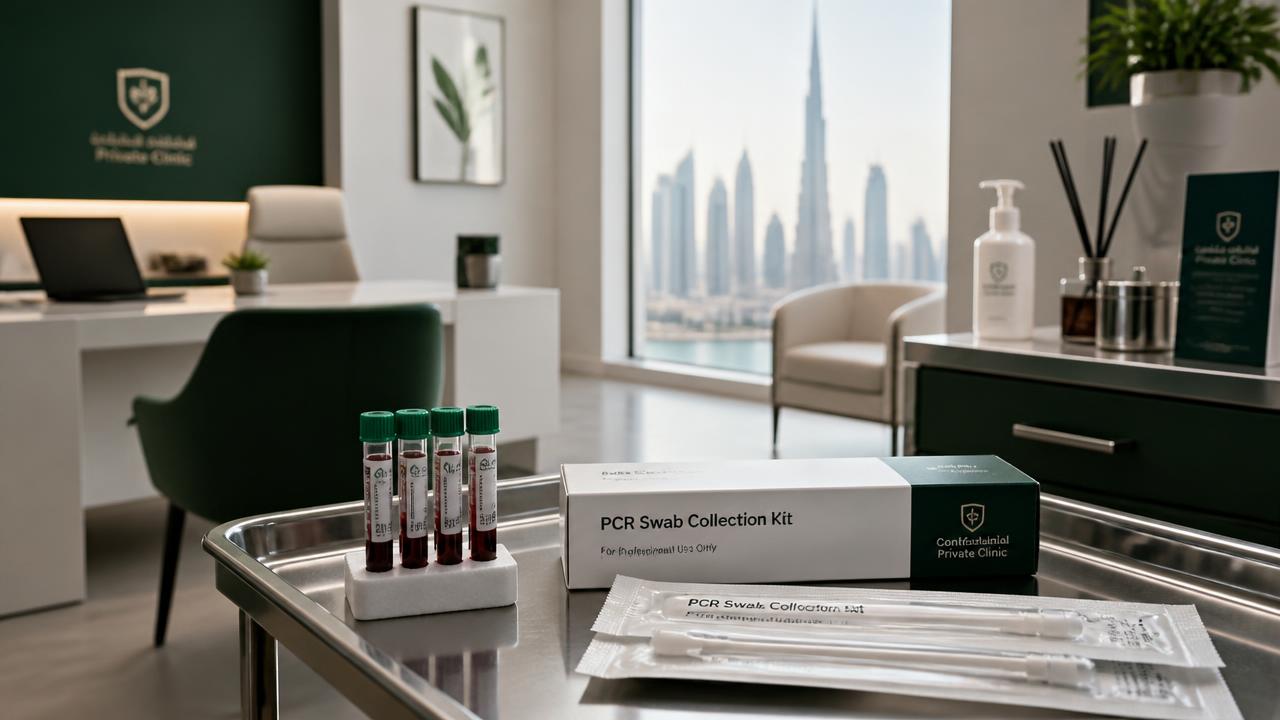
A sexually transmitted infection (STI, also called an STD) passes between people through vaginal, anal or oral sexual contact. The defining feature of modern STI epidemiology is how often infections are asymptomatic: the majority of chlamydia cases and a large share of gonorrhoea, early HIV and early syphilis cases produce no noticeable signs at all. That means symptoms are a poor screening trigger — the presence of an infection and the presence of symptoms are only loosely linked. A standard screen is built from a small number of sample types: a blood draw (HIV, syphilis, hepatitis B and C, herpes antibodies), a first-catch urine sample or genital swab (chlamydia, gonorrhoea, trichomonas by PCR), and where relevant throat and rectal swabs, because those sites are frequently missed by urine-only testing. Specialist sexual-health clinics in Dubai and across the UAE — Get Checked Clinic being one example of a dedicated single-focus service — package these into a full panel completed in one visit, often with same-day results. A reasonable rhythm for most sexually active adults is an annual screen, plus a screen after any new partner, after unprotected sex, or when a partner reports a positive result. Screening is a measurement, not a verdict: bacterial infections including chlamydia, gonorrhoea, syphilis and trichomoniasis are curable with the right antibiotic course, and viral infections including HIV, herpes and hepatitis B are manageable with modern antiviral treatment when they are found early.
Measured at Longevity Cliniq
See your own STI Screening number.
Every Longevity Cliniq panel includes the markers that drive healthspan, interpreted by a physician — across Dubai, Abu Dhabi and the wider UAE.